Chop Steak: The Old-School Steakhouse Plate That Still Earns Its Spot
Introduction
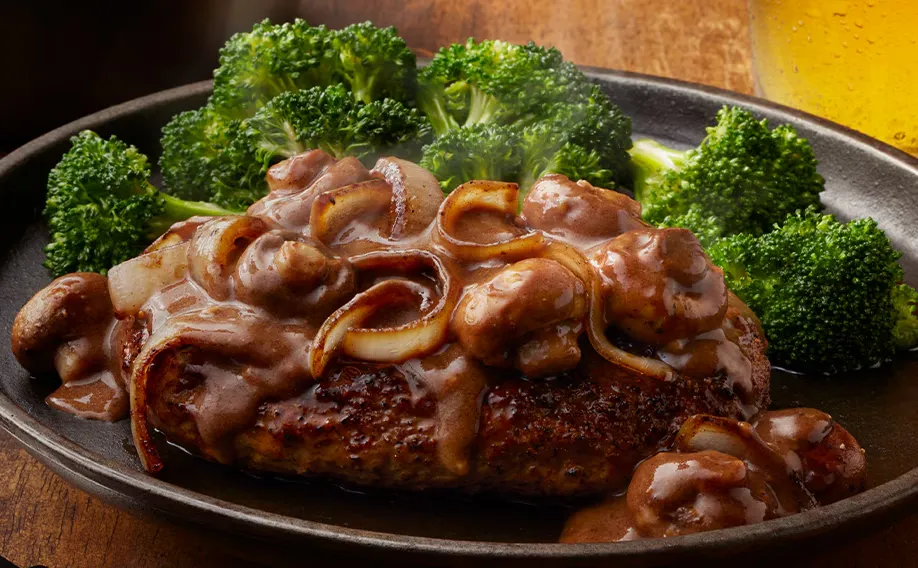
Chop steak is the kind of order that doesn’t show up on Instagram but keeps showing up on dinner plates across America. It’s a thick patty of seasoned ground beef, usually sirloin or chuck, grilled or seared until the outside crusts and the inside stays juicy. It’s served covered in brown gravy, smothered in sautéed onions and mushrooms, and sat next to mashed potatoes or a baked potato. For $10 to $16 at most steakhouses, it gives you the steakhouse experience without the steakhouse price.
In this guide, you’ll learn what’s actually in a chop steak, how it tastes, what it costs in calories, what major U.S. chains charge for it, and what to pair it with. By the end, you’ll know whether the chop steak on the menu in front of you is worth ordering and how to spot the version that’s worth your money.
Quick Takeaway: Chop Steak at a Glance
- What it is: A thick, seasoned ground beef patty (usually sirloin or chuck) grilled or seared, topped with gravy, onions, and mushrooms.
- How it tastes: Beefy, savory, with caramelized edges and rich gravy. Less expensive but flavor-forward.
- Average calories: 550–850 per portion before sides.
- Most common topping: Brown gravy, sautéed onions, and sautéed mushrooms.
- Best pairing: Mashed potatoes, steamed broccoli, a dinner roll, and a Cabernet Sauvignon.
- Average U.S. restaurant price: $10.99–$16.99 per plate.
- Most famous version: Texas Roadhouse and Bob Evans chop steak dinners.
What Is Chop Steak?
Chop steak is a thick, hand-formed patty made from ground beef, usually ground sirloin, ground chuck, or a blend seasoned with salt, pepper, garlic powder, and sometimes Worcestershire sauce, then cooked over an open flame, on a flat-top griddle, or in a cast iron skillet. It’s served as a steakhouse entrée, not as a sandwich. That distinction matters. A burger is on a bun. A chop steak is on a plate, almost always smothered in gravy, onions, or mushrooms.
The format dates back to the 1880s, when restaurants in the U.S. and Europe started serving “Hamburg steak,” a chopped beef patty cooked like a steak. By the early 1900s, it had split into two paths in America. The bunless version became the chop steak, hamburger steak, or Salisbury steak you’d find at a diner or steakhouse. The bunned version became the hamburger.
Restaurants cook chop steak three ways. The classic method is flame-grilling for 3 to 4 minutes per side, which gives it a char-grilled crust similar to a real steak. Some kitchens sear it on a flat-top griddle, which builds a heavier brown crust. Cast iron skillet finishing is common at higher-end steakhouses, it locks in juice and lets the patty rest in its own fat.
The thing that makes a chop steak different from a burger patty is thickness and treatment. A chop steak is usually 8 to 10 ounces, about an inch thick, and meant to eat with a knife and fork. It’s seasoned more aggressively than a burger patty and almost always served with a sauce on top.
Main Ingredients in Chop Steak
The base is straightforward. The toppings are where each kitchen builds its personality.
Core ingredients
- Ground beef (sirloin, chuck, or round) usually has an 80/20 or 85/15 lean-to-fat ratio
- Kosher salt
- Black pepper
- Garlic powder
- Onion powder
- Worcestershire sauce (in some versions)
- Vegetable oil or butter for cooking
Classic toppings
- Brown gravy
- Sautéed yellow onions
- Sautéed mushrooms
- A pat of butter
Common add-ins and upgrades
- Mushroom gravy or onion gravy
- Caramelized onions
- Crispy fried onions
- Bacon strips
- Melted cheese (Swiss, American, or cheddar)
- Steak sauce (A.1., Heinz 57, or HP)
- Fresh chopped parsley
- Cracked black pepper crust
- Garlic butter
A kitchen that takes it seriously will rest the patty for 3 to 4 minutes after cooking, the same way it would rest a real steak. That step lets the juices redistribute and keeps the patty from leaking onto the plate when you cut it. Skip the rest and you get a dry inside with a puddle on the plate.
Chop Steak vs. Hamburger Steak vs. Salisbury Steak
Three dishes that share a starting point ground beef shaped like a patty and served on a plate. Here’s how they actually compare.
| Type | Meat | Cooking Method | Sauce / Topping | Best For |
|---|---|---|---|---|
| Chop Steak | Ground sirloin or chuck, premium grind | Char-grilled or pan-seared | Brown gravy + onions + mushrooms | Steakhouse entrée |
| Hamburger Steak | Ground beef, standard grind | Pan-seared or griddled | Gravy + sautéed onions | Diner/family restaurant |
| Salisbury Steak | Ground beef + breadcrumbs + egg | Pan-seared, then simmered in gravy | Brown gravy + mushrooms | TV dinner / classic American |
| Burger Patty | Ground beef, standard grind | Griddled or grilled | Bun, no gravy | Sandwich |
The big differences come down to three things. Chop steak uses better-quality ground beef (often sirloin). Hamburger steak is the diner-friendly middle ground. Salisbury steak adds breadcrumbs and egg as binders, which gives it a softer texture closer to meatloaf. At most American chain restaurants, “chop steak” and “chopped sirloin” are the premium version, while “hamburger steak” is the older diner version. Different name, same general dish, but the quality and price gap can be real.
How Restaurants Get the Texture and Crust Right
The crust is what makes a chop steak feel like a steak instead of a burger patty. Here’s how serious kitchens build it:
| Step | What They Do | Why It Matters |
|---|---|---|
| 1. Use 80/20 or 85/15 beef | Higher fat = juicier patty | Lean beef dries out fast |
| 2. Season heavily | Salt, pepper, garlic, Worcestershire | Builds flavor through the patty, not just on top |
| 3. Form the patty thick | 1 inch minimum, 8–10 oz | Lets the inside stay juicy while the crust forms |
| 4. Hot heat sear | Flame or cast iron at high heat | Builds the Maillard crust |
| 5. Don’t press it down | Resist the urge to flatten | Keeps juices inside |
| 6. Rest before serving | 3–4 minutes off heat | Juices redistribute, no puddle on the plate |
| 7. Top with hot gravy | Sauce should be hotter than the patty | Keeps the meal hot all the way through |
Home cooks usually skip the rest step and over-press the patty. That’s why home chop steak often ends up dry on the inside with a watery plate. Heat and patience, those are the two things that matter most.
Taste and Flavor Profile
The first thing that hits you is the char. A properly cooked chop steak has a real seared crust, similar to a regular steak. The Maillard reaction at high heat creates a savory, almost smoky flavor on the outside that you don’t get from a burger patty cooked at lower temperatures. The inside is juicy, slightly pink, and tastes more like beef than seasoning.
The texture is the second thing. Done right, the patty has a firm bite on the outside, a tender pull in the middle, and stays juicy from edge to edge. Bad versions go two ways overcooked (gray, crumbly, dry) or undercooked (mushy, raw-tasting in the center). When it’s right, it eats more like a steak than a burger.
The toppings change the personality
- Brown gravy → classic, savory, comforting
- Mushroom gravy → earthy, deeper, more umami
- Onion gravy → sweeter, more aromatic
- Smothered (gravy + onions + mushrooms) → the full steakhouse experience
- Cheese-topped → richer, more burger-like
- Steak sauce only → cleaner, lets the beef lead
- Pepper-crusted → spicier, more peppery edge
If your chop steak tastes flat or just like a thick hamburger, the kitchen used cheap pre-seasoned beef and skipped the high-heat sear. Good chop steak should hit beefy, salty, and savory before the gravy even gets involved.
Nutritional Information
The numbers vary based on portion size, ground beef ratio, and toppings. A standard restaurant chop steak runs about 8 to 10 ounces of cooked beef. Here’s the typical range:
| Nutrient | Plain Chop Steak | With Gravy + Onions | Smothered (Full) |
|---|---|---|---|
| Calories | 450–600 | 550–750 | 700–950 |
| Total Fat | 28–40g | 32–45g | 40–58g |
| Saturated Fat | 11–16g | 13–18g | 16–22g |
| Carbohydrates | 1–3g | 6–12g | 10–18g |
| Sugar | 0–1g | 2–4g | 3–6g |
| Fiber | 0g | 1–2g | 2–3g |
| Protein | 45–60g | 46–62g | 50–68g |
| Sodium | 600–900mg | 1100–1600mg | 1400–2000mg |
| Iron | 5–7mg | 5–7mg | 6–8mg |
The beef itself is a serious protein source; a 10-ounce chop steak delivers 50+ grams of protein, plus heme iron, vitamin B12, zinc, and selenium. The fat content depends on the ground beef ratio. 80/20 is richer and juicier. 90/10 is leaner but drier. Most restaurants use 80/20 or 85/15.
The bigger concern is sodium, especially with gravy. A fully smothered chop steak can hit 2,000mg of sodium between the patty seasoning and the gravy. That’s the daily limit in one entrée.
The good news is that chop steak is naturally gluten-free if the kitchen doesn’t add breadcrumbs or use a flour-thickened gravy. Many do, though, so ask if you have celiac. Some restaurants offer a cornstarch-thickened gravy as a substitution.
How Chop Steak Compares to Other Steakhouse Mains
Trying to figure out if chop steak is the right pick? Here’s how it stacks up against other steakhouse entrées:
| Entrée | Calories | Protein | Avg. Price | Verdict |
|---|---|---|---|---|
| Chop Steak (smothered) | 700–950 | 50–68g | $10.99–$16.99 | ✅ Best value protein-to-price |
| 6 oz Sirloin Steak | 350–500 | 38–45g | $14.99–$18.99 | ⚠️ Smaller portion, leaner |
| 8 oz Ribeye | 600–800 | 50–60g | $22.99–$29.99 | ✅ Premium cut, higher price |
| Chicken Fried Steak | 800–1100 | 40g | $13.99–$17.99 | ❌ Higher cal, lower protein-to-cal ratio |
| Salisbury Steak | 600–800 | 35–45g | $11.99–$14.99 | ⚠️ Comparable, slightly less protein |
| Meatloaf | 550–750 | 30–40g | $12.99–$15.99 | ⚠️ Less protein |
| Grilled Chicken | 350–500 | 40–50g | $13.99–$16.99 | ✅ Leaner, less iron |
| Burger (entrée-style) | 700–950 | 35–45g | $13.99–$17.99 | ⚠️ Lower protein-to-cal ratio |
For pure protein per dollar, chop steak is one of the best deals on any steakhouse menu. You get 50+ grams of protein for about $13, which beats almost every other entrée at the price point.
Why People Love Chop Steak
A few real reasons this dish has stayed on American menus for over a century:
It’s a steak experience at a non-steak price. Most people can’t afford a $25 ribeye every time they go out. A $13 chop steak gives them the gravy, the onions, the mashed potatoes, and the steakhouse vibe at half the cost.
It’s comforting in a way ribeye isn’t. The gravy, the onions, the mushrooms, these are flavors most Americans grew up on. A ribeye is a special-occasion. A chop steak is Tuesday-night-with-the-family.
It’s reliable. A chop steak is hard to mess up at most chains. The patty is consistent, the gravy is the same every time, and the experience is predictable in a good way.
It’s kid-friendly. A 10-year-old will eat a chop steak when they won’t touch a real steak. The texture is softer, the gravy is familiar, and there’s no chewing through a tough cut.
The leftovers actually reheat. Unlike a real steak, which turns gray and rubbery in the microwave, chop steak holds up. The gravy keeps it moist and the patty stays tender.
It’s nostalgia food. For a lot of Americans, chop steak is what their parents or grandparents ordered at a diner. Ordering it now hits that memory.
Best Side Dishes and Drink Pairings
Chop steak is a hearty plate, so the sides should either complement it or lighten it up.
Best sides to pair it with
- Mashed potatoes (the classic soaks up gravy)
- Loaded baked potato
- Steamed broccoli or green beans
- Side salad with vinaigrette
- Mac and cheese (heavy but classic)
- Rice pilaf
- Sautéed mushrooms (extra)
- A dinner roll or biscuit
- Sweet corn (especially fire-grilled)
Best drinks to order with it
- Wine: Cabernet Sauvignon is the classic. Merlot works well with mushroom gravy. Malbec is great for smothered versions.
- Beer: An amber ale or brown ale complements the savory gravy. A light IPA cuts through the richness.
- Cocktails: An Old Fashioned. A whiskey on the rocks. A Manhattan if you’re feeling traditional.
- Non-alcoholic: Sweet tea is the Southern classic. Unsweetened iced tea is the safe pick. A cola also works.
Avoid pairing chop steak with a cream-based pasta as a side dish. The cream-on-gravy combination feels heavy and one-note. Stick with starches that absorb the gravy or vegetables that contrast the richness.
Variations and Popular Restaurant Versions
Almost every American chain steakhouse and family restaurant has a chop steak on the menu. Here’s a look at what’s actually out there right now:
| Restaurant | Dish Name / Style | Toppings | Avg. Price |
|---|---|---|---|
| Texas Roadhouse | Country Fried Sirloin / Chopped Steak | Brown gravy, sautéed onions, mushrooms | $13.99–$15.99 |
| Bob Evans | Chopped Steak | Brown gravy, grilled onions | $11.99–$13.99 |
| Cracker Barrel | Chopped Steak | Sautéed mushrooms, onions, gravy | $11.99–$13.99 |
| Western Sizzlin | Chopped Steak Dinner | Brown gravy, choice of toppings | $10.99–$12.99 |
| Golden Corral | Hand-Cut Chopped Steak | Available at the grill, customizable | $11.99–$14.99 |
| Outback Steakhouse | (Not standard Salisbury at lunch) | Brown gravy | $12.99–$14.99 |
| Sizzler | Chopped Steak | Brown gravy, onions | $10.99–$12.99 |
| Denny’s | Hamburger Steak | Brown gravy, sautéed onions | $11.99–$13.99 |
| Waffle House | T-Bone Steak / Chopped Steak Plate | Pan-seared, A.1. on the side | $9.99–$12.99 |
Prices reflect typical 2026 menu pricing in the U.S. and vary by location.
Beyond the chains, here are the styles you’ll see across American menus:
- Classic Chop Steak is the standard. Char-grilled patty, brown gravy, sautéed onions and mushrooms.
- Smothered Chop Steak fully covered in gravy, onions, and mushrooms. The full steakhouse experience.
- Chopped Sirloin premium version. Made from ground sirloin, specifically, often labeled as such.
- Salisbury Steak is the close cousin. Adds breadcrumbs and egg as binders. Softer texture.
- Hamburger Steak diner-style. Pan-seared instead of grilled, served with grilled onions and gravy.
- Cheese-Topped Chop Steak, melted Swiss or American on top, plus gravy.
- Pepper-Crusted Chop Steak has a cracked black pepper crust before searing. Spicier finish.
- Country Fried Chop Steak, breaded and fried, served with white country gravy. Different category but often labeled similarly.
- Garlic Butter Chop Steak finished with compound garlic butter instead of gravy.
How to Tell If Your Chop Steak Is Done Right
Not all chop steaks are equal. Here’s a quick checklist for what a properly cooked one should look and feel like:
- Crust: Should have a visible seared brown crust on top and bottom. Pale-gray surfaces mean it wasn’t cooked hot enough.
- Doneness: Slightly pink in the center for medium. Gray throughout means overcooked.
- Juice: When you cut it, juice should bead at the cut, not flood the plate. A flooded plate means the kitchen didn’t rest the patty.
- Gravy temperature: Should still be steaming when it hits the table. Lukewarm gravy is a sign of a kitchen shortcut.
- Onions and mushrooms: Should be soft and lightly caramelized, not raw, not burnt.
- Texture: Should hold its shape when you cut it, then yield to a fork. Crumbly means overcooked or too lean.
- Seasoning: Should taste seasoned all the way through, not just on the surface.
If your chop steak fails three or more of these, the kitchen cut corners. Most steakhouses will remake it if you ask politely.
Tips Before Ordering Chop Steak
A few things worth knowing before the plate hits the table:
Ask about the meat. Chopped sirloin is leaner and pricier. Ground chuck is fattier and richer. Most chains don’t specify on the menu, ask the server.
Order it medium, not well-done. A well-done chop steak is dry, period. Medium gives you the juicy interior with a fully cooked center.
Ask for extra gravy on the side. A small ramekin of extra brown gravy costs $0–$2 at most chains and lets you control how much you use.
Specify your toppings. “Smothered” usually means gravy, onions, and mushrooms. If you want just one, say so. Most kitchens will customize.
Watch the sodium. Between seasoning and gravy, a chop steak plate with mashed potatoes can hit 2,500mg of sodium. That’s well over a daily limit.
Ask about gluten. Most brown gravies are flour-thickened. If you have celiac, ask if there’s a gluten-free gravy option.
Order at lunch if available. Many chains run a smaller chop steak portion at lunch for $3–$5 less. Still satisfying, less of a calorie load.
Don’t order it for delivery. The gravy congeals, the onions go limp, and the patty turns gray. Eat it at the restaurant.
Skip the cheese topping unless you really want it. A slice of cheese adds 100+ calories and competes with the gravy. The classic version is better.
Take leftovers home. Unlike most cooked steaks, chop steak reheats well. Cover with extra gravy and microwave covered for 60 seconds.
Frequently Asked Questions
What’s the difference between chop steak and hamburger steak?
In most American restaurants, chop steak is the premium version made from ground sirloin or higher-quality ground beef, char-grilled, and served as a steakhouse entrée. Hamburger steak is the more traditional diner version, usually made from standard ground beef and pan-seared. At many family chains, the two names are used interchangeably for the same dish.
Is chop steak the same as Salisbury steak?
No. Salisbury steak adds breadcrumbs, eggs, and sometimes onions as binders, which gives it a softer, more meatloaf-like texture. Chop steak is pure seasoned ground beef formed into a patty. Salisbury steak is also almost always simmered in gravy. Chop steak is grilled or seared first, then topped with gravy.
How many calories are in a chop steak?
A plain chop steak (8–10 oz) runs about 450–600 calories. With brown gravy and sautéed onions, it climbs to 550–750. Fully smothered with gravy, onions, and mushrooms can hit 950 calories. Add a baked potato and the full plate easily clears 1,200.
Is chop steak healthy?
It’s a mixed bag. The beef itself is high in protein, iron, and vitamin B12 a 10 oz chop steak delivers 50+ grams of protein. The saturated fat content is high, and gravy adds significant sodium. As an occasional dinner, it’s reasonable. Daily, it adds up.
Is chop steak gluten-free?
The patty itself is usually gluten-free (no breadcrumbs, unlike Salisbury steak). The brown gravy almost always contains wheat flour. Some restaurants offer a gluten-free version using cornstarch ask the kitchen if you have celiac.
Is chop steak ground beef?
Yes. Chop steak is made entirely from ground beef, usually ground sirloin or ground chuck. The distinction from a hamburger is the thickness, the seasoning, the cooking method, and how it’s served (on a plate with gravy, not on a bun).
What gravy goes with chop steak?
Brown gravy is the classic. Mushroom gravy is the next most common. Onion gravy works for a sweeter finish. White country gravy is used on country-fried versions but not on standard chop steak.
What’s the best side dish for chop steak?
Mashed potatoes. The classic pairing. They soak up the gravy, balance the protein, and turn the meal into a complete plate. Steamed broccoli or green beans add fiber and lighten the meal up.
Why is chop steak cheaper than other steaks?
Because it’s made from ground beef instead of whole muscle cuts. Whole-muscle steaks like ribeye, sirloin, and filet are limited by what you can yield from a single cow. Ground beef can be made from trimmings and less-desirable cuts, which lowers the cost dramatically. Chop steak gives you a steakhouse plate at a ground-beef price.
Can I order chop steak well-done?
You can, but it’s not recommended. Ground beef cooked well-done turns dry fast because there’s no marbling structure to keep the moisture in. Medium is the sweet spot fully cooked but still juicy.
Is chopped steak the same as chopped sirloin?
Sometimes. “Chopped sirloin” specifies the cut of beef used, which is usually a step up from generic ground beef. “Chop steak” is the broader term and can use any ground beef cut. If a restaurant offers both, chopped sirloin is the premium version.
Can I make chop steak at home?
Easily. 80/20 ground beef, salt, pepper, garlic powder, and a hot cast iron pan are all you need. Form a 10-oz patty, sear it 3 minutes per side on high heat, rest it 4 minutes, and serve with store-bought or homemade brown gravy. The hardest part is resisting the urge to press the patty down while it cooks.
Conclusion
Chop steak is the steakhouse plate that doesn’t get the credit it deserves. It’s not flashy, it’s not Instagram-friendly, and it doesn’t get headlines on food blogs. But it shows up reliably on menus across America because it does what a good entrée should do: fill you up, taste like home, and leave you satisfied without emptying your wallet. When the kitchen takes the time to use real ground sirloin, sear it hot, rests it properly, and top it with hot gravy, you get a plate that genuinely competes with a $25 steak for half the price.
If you’re choosing between a chop steak and a more expensive cut at a chain steakhouse, the chop steak is the smarter pick more often than people admit. Order it medium, ask for the full smothered treatment with onions and mushrooms, take a side of mashed potatoes, and don’t be afraid to ask for extra gravy. That’s how it’s meant to be eaten.
Related LongHorn Guides
LongHorn Salmon: Price, Calories, Taste & What to Order With It · Longhorn Baby Back Ribs: Price, Calories, Sauces & Other · Longhorn Cowboy Pork Chop: Price, Calories, Taste & Other