Cowboy Pork Chop: A Complete Guide to the Bone-In Steakhouse Pork Chop
Key Takeaways
- The Cowboy Pork Chop is a thick-cut, bone-in pork chop, usually 12 to 18 ounces, made famous by LongHorn Steakhouse and now served at multiple American steakhouses.
- A standard restaurant portion runs $22.99–$29.99 and around 600–850 calories before sides.
- The flavor is rich, savory, and lightly smoky with a charred crust and steakhouse-style seasoning.
- Best paired with mashed potatoes, grilled asparagus, applesauce, or a house salad.
- Cooked to a juicy medium (145°F internal) never order it well-done unless you like dry pork.
- Often considered one of the best-value entrées on a steakhouse menu, same weight as a ribeye at $5–10 less.
Introduction
The Cowboy Pork Chop is one of those menu items that quietly outperforms the steaks sitting right next to it. A thick-cut, bone-in pork chop the size of a small ribeye, grilled over open flame, seasoned with a steakhouse-style blend, and served with the bone still attached for both flavor and presentation. LongHorn Steakhouse built it into a signature dish, but you’ll find versions of it at Texas Roadhouse, Outback, and most American steakhouses, usually under names like “Bone-In Pork Chop,” “Cowboy Cut,” or “Tomahawk Pork Chop.”
This guide breaks down what a Cowboy Pork Chop actually is, what cut it comes from, how it’s cooked, how much it costs, how many calories it carries, and the best ways to pair it. Whether you’re ordering it tonight at LongHorn or trying to cook one at home, this covers everything you need.
What Is a Cowboy Pork Chop?
A Cowboy Pork Chop is a thick-cut, bone-in pork rib chop typically 1.5 to 2 inches thick and weighing 12 to 18 ounces with the bone left long and sometimes frenched (cleaned of meat) for a dramatic, almost tomahawk-steak appearance. The cut comes from the rib end of the pork loin, which is the same general area that produces baby back ribs and pork ribeye. That’s why it’s sometimes called a “pork ribeye” or “pork tomahawk.”
The “Cowboy” in the name is the same naming convention used for the Cowboy Ribeye, a marketing term that signals a big, bone-in, hand-cut piece of meat with western steakhouse presentation. It doesn’t refer to a specific breed or processing method.
LongHorn Steakhouse popularized the dish on national chain menus, and it’s now one of their most-ordered non-steak entrées. Other chains that serve their own version include:
- Texas Roadhouse (Hand-Cut Bone-In Pork Chop)
- Outback Steakhouse (Bone-In Pork Chop, when on the menu)
- Logan’s Roadhouse (Cowboy Pork Chop)
- Ruth’s Chris (Berkshire Pork Chop high-end version)
- Capital Grille (Bone-In Pork Rib Chop)
Independent steakhouses have also adopted the format, often using heritage pork breeds like Berkshire or Duroc for a premium version. Most chain versions use commodity USDA pork, which is consistent year-round but less rich than heritage breeds.
What separates a Cowboy Pork Chop from a regular pork chop is the thickness and the bone. Both matter. A thick chop has more room for a juicy center without overcooking the exterior, and the bone slows heat transfer and adds flavor during cooking. A 1-inch boneless pork chop and an 18-ounce Cowboy chop are technically the same cut but eat completely differently.
How LongHorn Cooks Their Cowboy Pork Chop
LongHorn’s version is the benchmark, so it’s worth understanding how it’s prepared.
The chop arrives at the restaurant pre-trimmed and frenched. Before service, it gets a dry brine coated in salt and the LongHorn signature seasoning blend, then refrigerated for several hours. The dry brine pulls moisture into the meat and seasons it from the outside in. This is the step that separates a great pork chop from a dry one.
At the line, the chop goes through a two-stage cook:
- Open-flame grill sear. The chop hits the same hot grill they use for steaks, picking up real char marks and grill flavor on both sides.
- Finish in the oven or on the cooler side of the grill. Because it’s so thick, the chop needs lower heat to bring the internal temperature up to 145°F without burning the exterior. This is the reverse sear technique, just adapted for a busy kitchen.
Total cook time is around 12–18 minutes depending on thickness. The chop then rests for 3–5 minutes before plating. This is non-negotiable for juicy pork and is finished with a brush of butter and sometimes a small drizzle of glaze or pan sauce, depending on the seasonal preparation.
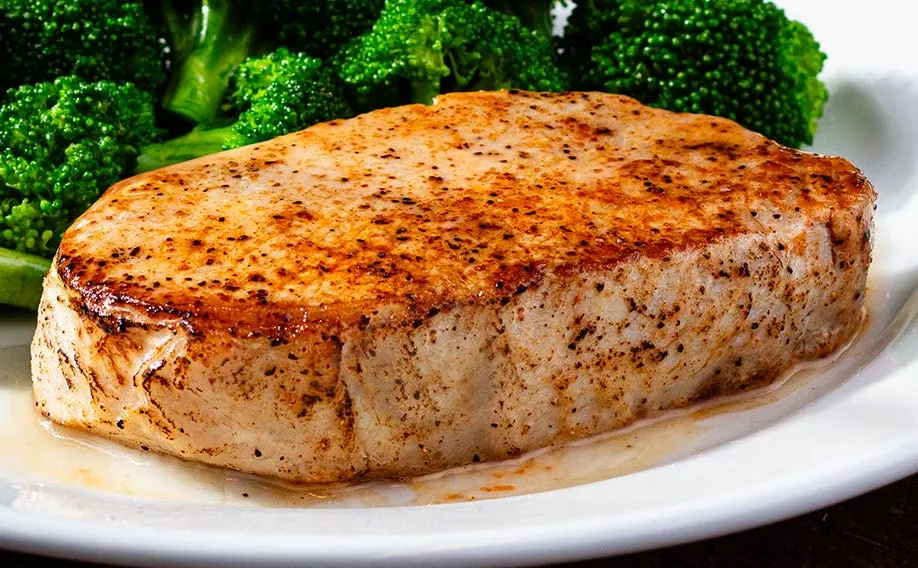
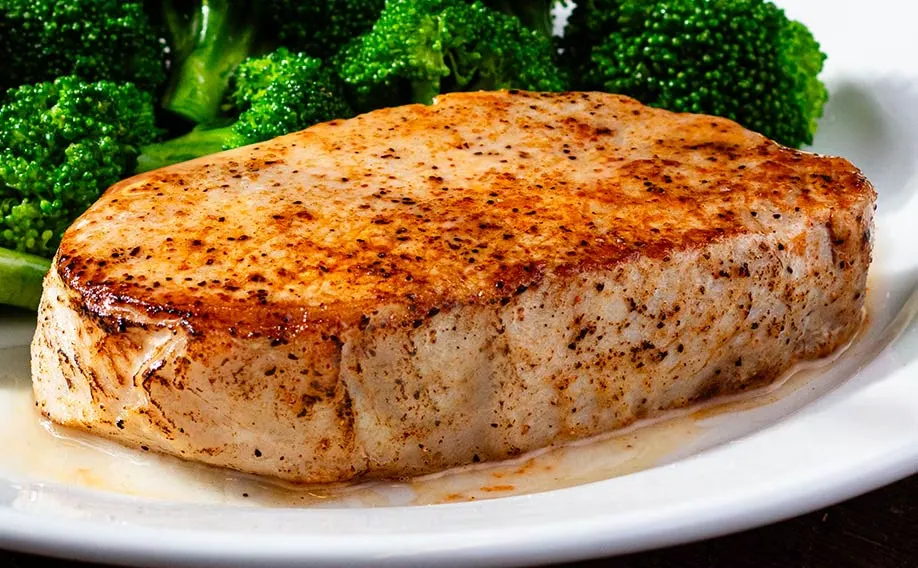
The result is a chop with a crusty, well-seasoned exterior, a juicy pink center, and meat that pulls cleanly off the bone with a fork.
Cowboy Pork Chop Price (2026)
Pricing varies by chain and location, but here’s the general range across U.S. steakhouses in 2026.
| Restaurant | Approx. Price | Includes |
|---|---|---|
| LongHorn Steakhouse (Cowboy Pork Chop) | $22.99 – $26.99 | Chop + 2 sides |
| Texas Roadhouse (Bone-In Pork Chop) | $19.99 – $23.99 | Chop + 2 sides |
| Outback Steakhouse (Bone-In Pork Chop, when offered) | $23.99 – $27.99 | Chop + 2 sides |
| Logan’s Roadhouse | $19.99 – $22.99 | Chop + 2 sides |
| Capital Grille (Bone-In Pork Rib Chop) | $44.99 – $52.99 | Chop only, sides à la carte |
| Ruth’s Chris (Berkshire Pork Chop) | $48.99 – $56.99 | Chop only, sides à la carte |
LongHorn’s version is usually considered the best value in the category, with the same cut and similar quality to higher-end chains at half the price of premium steakhouses. Texas Roadhouse runs slightly cheaper but with a thinner cut at most locations.
The Cowboy Pork Chop is also one of the best price-per-ounce entrées on a steakhouse menu. At $25 for an 18-ounce bone-in cut with two sides, it competes directly with sirloin and ribeye on volume and beats both on uniqueness.
Prices vary by location and season. Confirm current pricing on the restaurant’s app or menu.
Taste and Flavor Profile
The Cowboy Pork Chop tastes savory, slightly smoky, and naturally rich, closer to a pork ribeye than what most people think of when they hear “pork chop.”
The crust is the first thing you notice. A well-cooked Cowboy Pork Chop has a deep brown, seasoned exterior with grill marks and a slight char. This is where the Maillard reaction does its work, caramelizing the sugars in the seasoning and creating the flavor that separates grilled pork from baked or pan-fried pork.
The meat underneath stays juicy because of the thickness and the bone. Pork from the rib end has a higher fat content than the loin end, which is why this cut tastes richer than a standard center-cut chop. The fat melts during cooking, basting the meat from inside.
The bone adds a subtle, slightly mineral flavor that you don’t get from a boneless chop. Some chefs swear this is mostly psychological. Most diners disagree. Either way, the bone-in version eats differently.
The seasoning is steakhouse-forward salt, pepper, garlic, paprika, with a touch of brown sugar that caramelizes during the sear. It’s not sweet, not spicy, not heavy. It’s designed to support the pork rather than mask it.
If your chop arrives dry, that’s an overcooking issue, not the cut. Pork dries out fast past 150°F internal. A properly cooked Cowboy Pork Chop should be juicy and pink in the center and yes, pink pork is safe and correct.
Calories and Nutrition
The Cowboy Pork Chop is a substantial entrée, but it’s not as heavy as people assume. Numbers vary by chain and exact weight, but here’s the general range.
| Nutrient | Approx. per chop (14 oz bone-in, ~10 oz edible meat) |
|---|---|
| Calories | 600 – 850 |
| Total fat | 32 – 48 g |
| Saturated fat | 11 – 16 g |
| Carbohydrates | 4 – 10 g |
| Protein | 60 – 75 g |
| Sodium | 1,300 – 1,900 mg |
| Cholesterol | 200 – 260 mg |
| Sugar | 2 – 6 g |
A few things worth knowing before you order
Protein is massive. A single Cowboy Pork Chop delivers 60–75 grams of protein more than most steaks at the same price point. For high-protein diets, it’s one of the best-value orders on the menu.
Sodium is the watch-out. Between the dry brine, the seasoning, and any finishing butter, a single chop hits well over half the FDA’s daily sodium recommendation. Add a loaded baked potato and you’ve cleared 3,000 mg in one meal.
Saturated fat runs moderate. Pork rib chops have visible fat marbling, but the saturated fat content is similar to or lower than a comparable ribeye steak.
Carbs are minimal on the chop itself, making it a popular pick for keto and low-carb diners at steakhouses.
Pork is leaner than people think. Modern pork production produces meat that’s about 16% leaner than it was 25 years ago. The National Pork Board’s “Pork. The Other White Meat” campaign was based on this data: pork loin has fat content comparable to skinless chicken thigh.
Why People Love the Cowboy Pork Chop
It hits a few specific things that most steakhouse entrées miss.
It feels different from a steak without being a downgrade. If you’ve had ribeye every week for a month, the Cowboy Pork Chop gives you the same “I’m having a serious dinner” experience with a different flavor profile.
It’s huge. A 14-to-18-ounce bone-in cut is one of the biggest single pieces of meat on most steakhouse menus. The visual impact when it lands on the table is half the appeal.
It’s a better value than most steaks. Same plate, same sides, $5–10 less than a comparable ribeye. For diners watching their bill, this is the smart pick.
It works for special occasions. The presentation of the long bone, dark crust, oversized chop looks like a special-occasion entrée. It photographs well, which matters more than it should.
Pork has flavor depth that beef doesn’t. Pork takes on smoke, char, glaze, and brine differently than beef. The Cowboy Pork Chop showcases this in a way a thin pan-fried chop never can.
It’s familiar but rare. Almost every American grew up eating pork chops at home. Getting a Cowboy version at a steakhouse feels like an upgraded version of comfort food, nostalgic and impressive at the same time.
Best Side Dishes for Cowboy Pork Chop
The chop is rich and savory, so the best sides either lean acidic and bright to balance the richness, or double down on the comfort-food vibe with starchy classics.
Best classic pairings
- Mashed potatoes. The standard. Soaks up the pan juices.
- Applesauce or apple chutney. The traditional pork pairing the acidity cuts the fat beautifully.
- Grilled asparagus. Char and lemon match the chop’s grill flavor.
- Loaded baked potato. Steakhouse classic, holds up to the chop’s size.
- Seasoned rice pilaf. Light and neutral.
- Mac and cheese. Comfort food doubles down.
- Coleslaw. Acidic vinegar slaw cuts through the richness.
- Roasted Brussels sprouts. Caramelized edges complement the grill marks.
Best salads
- House salad with vinaigrette. The acidity cleans the palate between bites.
- Strawberry & Pecan Salad (at LongHorn). Sweet-savory balance works well.
- Caesar salad. Sharp and crunchy.
Best drink pairings
- Red wine, Pinot Noir or Zinfandel. Both pair beautifully with pork. Pinot is lighter and food-friendly; Zinfandel matches the smoke.
- Red wine Côtes du Rhône or Syrah. Bigger reds that hold up to the seasoning.
- White wine off-dry Riesling. A classic pork pairing. The slight sweetness matches the brown sugar in the seasoning.
- Beer: amber ale, Märzen, or brown ale. Malty beers complement grilled pork.
- Bourbon or whiskey. Works especially well with glazed versions.
- Non-alcoholic apple cider, sparkling water with lemon, unsweet iced tea.
Skip heavy sweet cocktails and oaky chardonnays, they fight the savory char.
Variations and Popular Versions
The Cowboy Pork Chop has become a category of its own at American steakhouses. Here are the versions worth knowing.
LongHorn Cowboy Pork Chop
The benchmark. Thick-cut bone-in chop, dry-brined, flame-grilled, finished with butter. Sometimes runs as a seasonal special with a bourbon glaze.
Texas Roadhouse Bone-In Pork Chop
Slightly thinner cut (around 12 oz) but well-seasoned and grilled. One of the most-ordered non-steak entrées on their menu.
Outback Steakhouse Bone-In Pork Chop
Limited-time availability at most locations. Heavier glaze and a sweeter finish than LongHorn.
Capital Grille Bone-In Pork Rib Chop
Premium version. Heritage pork, higher price, often served with a sweet onion preparation.
Ruth’s Chris Berkshire Pork Chop
The high-end take. Uses Berkshire heritage pork, finished in butter, served sizzling. The most expensive but arguably the best-tasting in the category.
Smoked Cowboy Pork Chop
Some BBQ-focused restaurants serve a smoked version, cooked low and slow over hickory or applewood before a quick sear. Different flavor profile, equally good.
Apple Bourbon Glazed Cowboy Pork Chop
A popular seasonal preparation in fall. The apple-bourbon glaze complements pork’s natural sweetness and pairs with the brown sugar in the dry rub.
Home reverse-seared version
Common technique among home cooks. The chop is cooked low in the oven first (250°F until 130°F internal), then finished with a hot sear in a cast iron skillet. Produces restaurant-quality results.
Sous vide Cowboy Pork Chop
Foodie-favorite home preparation. Vacuum-sealed and cooked at 140°F for 1–2 hours, then seared. Most consistent juicy result possible.
How to Order Cowboy Pork Chop Like a Regular
A few specific tips that make the meal noticeably better.
Order it medium (145°F internal). This is the single most important tip. The USDA officially lowered the safe pork temperature from 160°F to 145°F over a decade ago. Properly cooked pork is pink in the center and safe to eat. If you order medium-well or well-done, expect dry meat.
Ask if it comes with a glaze or sauce. Some locations serve it plain, others finish it with butter or a seasonal glaze. Worth confirming what your location runs that night.
Request a meat thermometer check if you’re picky. Most kitchens will accommodate this on a high-priced cut. You’re paying $25+ for a single piece of meat, don’t be shy.
Let it rest before cutting. When it arrives, give it 60–90 seconds before slicing. The juices redistribute and the texture noticeably improves.
Cut against the grain. The pork rib chop has a clear grain direction. Cutting across it makes each bite more tender.
Pair smart. A starch (mashed potatoes, rice) and a vegetable (asparagus, broccoli) is the balanced move. Two heavy starches with the chop turns a $30 meal into 2,000 calories.
Add applesauce on the side. Most steakhouses don’t list it but will bring it if you ask. Free pairing upgrade.
Skip the appetizer if you’re ordering this. A 14+ oz chop is filling on its own. A heavy appetizer means leftover meat and pork doesn’t reheat as well as steak.
Pro Tips from Regulars
- LongHorn’s seasonal Apple Bourbon Cowboy Pork Chop is one of the best limited-time entrées in the chain steakhouse category. Worth ordering whenever it returns to the menu (usually fall).
- Pair the chop with mashed potatoes + grilled asparagus + a glass of Pinot Noir for the standard “good restaurant night” combo at around $40 total.
- Ask for the chop “cooked a little under medium” if you like maximum juiciness. Most kitchens will pull it at 140°F so carryover cooking hits 145°F on the plate.
- If you’re splitting the chop, ask the kitchen to slice it before plating. They’ll usually do it for a small fee or sometimes free.
How to Make a Cowboy Pork Chop at Home
The restaurant-quality home version is one of the easier steakhouse dishes to replicate if you have a meat thermometer and a cast iron skillet. The recipe below is a close approximation of the LongHorn-style preparation.
You’ll need (serves 2)
- 2 bone-in pork rib chops, 1.5 inches thick (12–14 oz each)
- 2 tablespoons kosher salt (for dry brine)
- 1 tablespoon black pepper, freshly cracked
- 1 tablespoon brown sugar
- 1 teaspoon smoked paprika
- 1 teaspoon garlic powder
- 1/2 teaspoon onion powder
- 2 tablespoons olive oil or neutral oil
- 2 tablespoons unsalted butter
- 2 sprigs fresh rosemary or thyme
- 2 garlic cloves, smashed
The method (reverse sear)
- Dry brine. Pat the chops dry. Coat all sides with kosher salt and refrigerate uncovered for 4–12 hours. This is the most important step for juicy pork.
- Season. Mix pepper, brown sugar, paprika, garlic powder, and onion powder. Rub onto the chops just before cooking.
- Low oven cook. Preheat oven to 250°F. Place chops on a wire rack over a sheet pan. Cook until internal temperature hits 130°F, usually 25–35 minutes.
- Rest briefly. Remove from oven and let sit for 5 minutes.
- Hot sear. Heat a cast iron skillet over high heat with olive oil until smoking. Sear chops 60–90 seconds per side until a deep brown crust forms.
- Butter baste. Lower heat to medium. Add butter, rosemary, and smashed garlic. Tilt the pan and spoon the foaming butter over the chops for 30 seconds per side.
- Pull at 145°F internal. Use a meat thermometer to confirm. Carryover cooking will bring it slightly higher during the rest.
- Rest for 5 minutes, then serve.
Total active time: about 15 minutes. Total time (including brine): 4–12 hours. The result is a chop with a deep crust, juicy pink center, and the same restaurant-quality texture you get at LongHorn.
Frequently Asked Questions About Cowboy Pork Chop
What cut of meat is a Cowboy Pork Chop?
It’s a thick-cut, bone-in pork rib chop from the rib end of the pork loin, the same area that produces baby back ribs. The bone is left long, sometimes frenched, for steakhouse presentation. Usually 1.5 to 2 inches thick and 12 to 18 ounces.
Why is it called a “Cowboy” Pork Chop?
It’s a marketing name, the same naming convention used for the Cowboy Ribeye. It signals a big, bone-in, hand-cut piece of meat with western steakhouse presentation. It doesn’t refer to a breed or processing method.
How many calories are in a Cowboy Pork Chop?
A standard 14 oz bone-in chop runs 600–850 calories before sides. With sides, a full meal lands between 1,000 and 1,800 calories depending on what you pair it with.
Is the Cowboy Pork Chop healthy?
It’s high in protein (60–75g per chop) and lower in saturated fat than most steaks at the same weight. The watch-outs are sodium and total fat. As a single entrée, it’s reasonable. With heavy sides, it adds up fast.
Should pork chops be pink in the middle?
Yes, when cooked properly. The USDA lowered the safe internal temperature for pork to 145°F (followed by a 3-minute rest) over a decade ago. At that temperature, pork is pink in the center and completely safe to eat. Cooking past 150°F dries it out.
What’s the best way to cook a Cowboy Pork Chop at home?
Reverse sear. Cook in a 250°F oven until the internal temperature reaches 130°F, then finish with a hot sear in a cast iron skillet with butter, rosemary, and garlic. Pull at 145°F and rest for 5 minutes before serving.
What’s the difference between a Cowboy Pork Chop and a regular pork chop?
Thickness and the bone. A regular boneless pork chop is usually under an inch thick. A Cowboy Pork Chop is 1.5–2 inches thick, bone-in, and 3–4 times the weight. The thickness keeps it juicy and the bone adds flavor.
Which restaurant has the best Cowboy Pork Chop?
LongHorn Steakhouse is the most consistent chain version at a fair price. Ruth’s Chris and Capital Grille run premium versions with Berkshire pork at significantly higher prices. Texas Roadhouse is the budget pick.
What sides go best with a Cowboy Pork Chop?
Mashed potatoes, applesauce, grilled asparagus, and a house salad. The combination of starch, acidity, and vegetable balances the richness of the chop.
Can you order a Cowboy Pork Chop as takeout?
You can, but it loses some of its appeal. Pork chops keep cooking in the takeout container and dry out faster than steak. Dine-in is meaningfully better.
Conclusion
The Cowboy Pork Chop is the most underrated entrée on most steakhouse menus. A thick-cut, bone-in pork rib chop, dry-brined, flame-grilled, and served the size of a small ribeye at $5–10 less than the ribeye sitting next to it on the menu. Order it medium (pink in the center is safe and correct), pair it with mashed potatoes and grilled asparagus, and add a side of applesauce if you want the traditional pairing. Whether you’re at LongHorn, Texas Roadhouse, or cooking one at home, the rule is the same: thick cut, hot grill, proper rest, and don’t overcook it. That’s what makes the difference between a forgettable pork chop and the best entrée at the table.
Related LongHorn Guides
LongHorn Salmon: Price, Calories, Taste & What to Order With It · Longhorn Baby Back Ribs: Price, Calories, Sauces & Other · Longhorn Chop Steak: What It Is, How It Tastes & Price