Hand-Breaded Chicken Tenders: A Complete Guide to What They Are, How They’re Made, and What to Order With Them
Key Takeaways
- Hand-breaded chicken tenders are made fresh in-restaurant chicken strips dipped by hand in buttermilk and seasoned flour before frying, not pulled from a freezer bag.
- A standard 5-tender order runs 450–700 calories depending on the breading and oil used.
- The texture is the entire point: crisp, craggy crust on the outside, juicy meat inside.
- Best paired with honey mustard, ranch, BBQ sauce, or hot honey for dipping.
- Found on menus at LongHorn Steakhouse, Cracker Barrel, Raising Cane’s, and most American casual chains.
- Higher quality and noticeably more expensive than froen tenders usually $2–4 more per order.
Introduction
Chicken tenders are everywhere. They’re on kids’ menus, late-night drive-thru menus, sit-down restaurant menus, and basically every grocery store freezer aisle in America. But there’s a real difference between the frozen kind that get reheated under a heat lamp and the hand-breaded chicken tenders that get dipped, dredged, and fried fresh when you order them. Once you’ve had the hand-breaded version, the difference is hard to unsee.
This guide breaks down what hand-breaded chicken tenders actually are, what goes into them, how they taste, how many calories they hit, the best sauces to dip them in, and where to find the best ones at U.S. restaurants. If you’re ordering tonight or just trying to understand why some tenders are twice as good as others, this covers it.
What Are Hand-Breaded Chicken Tenders?
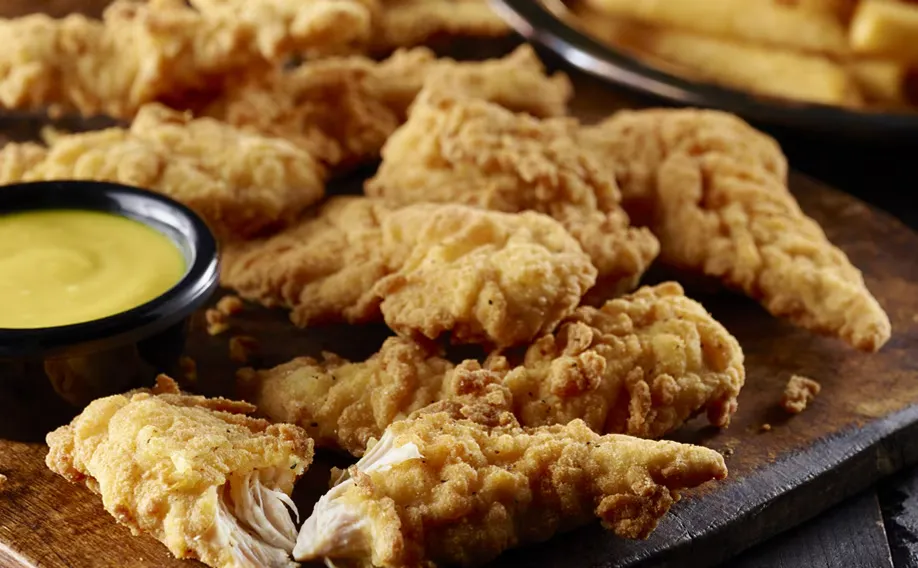
Hand-breaded chicken tenders are strips of chicken breast, usually the chicken tenderloin, a smaller muscle that runs along the underside of the breast, that are coated by hand in seasoned flour and breading, then fried fresh. The word “hand-breaded” means a real person in the kitchen dredged each piece, not that they came out of a pre-made bag.
The process is straightforward but matters:
- The raw chicken is trimmed and marinated, usually in buttermilk for several hours.
- Each strip gets dredged in a seasoned flour mixture.
- It’s pressed firmly into the coating to build a craggy, uneven crust the part that gives hand-breaded tenders their signature texture.
- The tenders fry in oil at around 350°F until golden brown, about 4 to 6 minutes.
Compare that to frozen tenders, which are mass-coated in a factory, flash-frozen, shipped in cases, and reheated in a fryer or oven. The frozen kind has a uniform, smooth coating. Hand-breaded ones look rougher, with thicker patches and crispier ridges and that’s a good sign, not a flaw.
Restaurants like LongHorn Steakhouse, Cracker Barrel, Raising Cane’s, and Zaxby’s built their tender reputations on hand-breading. It’s the reason their orders cost more and take a few minutes longer to come out.
Main Ingredients in Hand-Breaded Chicken Tenders
The ingredient list is short, but every piece matters.
Chicken tenderloins. The cut itself. Tenderloins are naturally more tender and slightly sweeter than chicken breast meat. Some restaurants cut full chicken breasts into strips instead, which works but isn’t quite the same.
Buttermilk. The marinade. The acidity tenderizes the meat, and the fat coats it so the breading sticks. A buttermilk soak of 4 to 24 hours is standard. Some kitchens add hot sauce or pickle juice to the soak for extra flavor and tenderness.
All-purpose flour. The base of the breading. Some recipes blend in cornstarch (for extra crispness) or panko breadcrumbs (for a thicker crunch).
Seasoning blend. This is where each restaurant differentiates. Common ingredients include kosher salt, black pepper, paprika, garlic powder, onion powder, and cayenne. Cracker Barrel’s seasoning leans Southern. LongHorn’s runs more steakhouse-savory. Raising Cane’s keeps it intentionally simple.
Egg wash (optional). Some kitchens dip the chicken in egg between the buttermilk and flour for an even thicker crust. The double-dredge method is what creates the bumpy, ridged texture.
Frying oil. Peanut oil is the gold standard high smoke point, neutral flavor, crispy results. Canola and vegetable oil are common substitutes.
That’s it. No mystery ingredients, no chemical-sounding names. The quality comes from the technique, not a long ingredient list.
What Hand-Breaded Chicken Tenders Taste Like
The flavor is straightforward: savory, salty, lightly seasoned chicken with a crunchy crust. But the texture is what separates good tenders from forgettable ones.
A proper hand-breaded tender has three distinct layers in every bite the crisp, almost shattering outer crust, a slightly softer breading layer underneath, and juicy white meat in the center. The crust holds up to dipping without falling off, and the meat stays moist because the breading seals in the juices during frying.
The seasoning is meant to support the chicken, not overpower it. You should taste salt, a little garlic, maybe paprika and pepper, but the chicken itself should still come through. Restaurants that over-season their tenders are usually trying to hide cheap or dry meat.
Frozen tenders, by comparison, tend to taste flat. The breading is even but thin, the seasoning is mild, and the meat itself often has that processed, slightly rubbery texture from being pre-cooked and reheated.
A well-made hand-breaded tender doesn’t need sauce. It works on its own. Sauce is a bonus, not a cover-up.
Calories and Nutrition
Hand-breaded chicken tenders are not health food, but they’re not the worst thing on a menu either. The numbers depend on size, oil, and breading thickness.
| Nutrient | Approx. per 5-tender order (~6 oz cooked) |
|---|---|
| Calories | 450 – 700 |
| Total fat | 22 – 38 g |
| Saturated fat | 5 – 9 g |
| Carbohydrates | 28 – 42 g |
| Protein | 32 – 45 g |
| Sodium | 1,100 – 1,800 mg |
| Fiber | 1 – 2 g |
| Sugar | 1 – 3 g |
A few things to know:
Protein is the upside. A standard order delivers 30+ grams of protein, which is solid for an entrée.
Sodium is high. Between the seasoned breading and the seasoned chicken, a single order can hit 70% of the FDA’s daily sodium recommendation (2,300 mg). Add fries and a sauce, and you’re well over the limit.
Sauces add up fast. Honey mustard runs about 150 calories per serving. Ranch is similar. Hot honey is around 80 calories. Most diners use 2–3 sauce cups per order without realizing it.
Oil matters. Tenders fried in fresh peanut oil are crispier and slightly lighter than ones fried in oil that’s been used all day. This is why early-evening orders often taste better than late-night ones.
Why People Love Hand-Breaded Chicken Tenders
There’s a reason chicken tenders refuse to leave American menus. They check almost every comfort-food box at once.
They’re universally approved. Kids eat them. Adults eat them. Picky eaters eat them. They’re one of the few menu items that work for every age and palate.
The texture is satisfying. That crunch when you bite through the breading is hard to beat. Frozen tenders can’t replicate it.
They’re customizable through sauce. Honey mustard for sweet, ranch for cool, BBQ for smoky, hot honey for spicy. The base stays the same, but the meal changes.
They’re portable. They can be eaten with hands, dipped, packed, or wrapped. Easy for casual dining, perfect for takeout.
They’re nostalgic. For most Americans, chicken tenders were a childhood meal. Ordering them as an adult triggers comfort the same way grilled cheese or mac and cheese does.
Hand-breaded versions specifically appeal to people who’ve outgrown the frozen kind but still want the same satisfaction. They’re tenders for grown-ups who notice the difference.
Best Dipping Sauces for Hand-Breaded Chicken Tenders
The sauce can make or break the order. Here’s a breakdown of what pairs best with hand-breaded tenders, ranked by how well they work.
Top picks
- Honey mustard. The classic. Sweet, tangy, sharp enough to cut the breading. Works with every seasoning style.
- Ranch dressing. Cool, creamy, herby. Especially good with spicier tender seasonings.
- Hot honey. Sweet heat. The trending pairing for the last few years and not going anywhere, perfect for craggy hand-breaded crust.
- BBQ sauce. Smoky, sweet, and familiar. Best with leaner seasonings that don’t fight the smoke.
- Cane’s sauce. A creamy, peppery dip with a mayo-ketchup-Worcestershire base. Cult favorite for a reason.
- Chick-fil-A sauce. Smoky-sweet honey BBQ-mustard blend. Pairs well even with non-CFA tenders.
Solid second tier
- Buffalo sauce. Hot and tangy. Works if you want spice without changing the breading.
- Garlic aioli. Rich, garlicky, restaurant-y. Best for adult palates.
- Sweet chili sauce. Light heat, lots of sweetness. Good for variety.
- Maple-bacon or maple-Dijon. Trending sweet-savory dips.
Skip these
- Ketchup alone. Too thin, too one-note. Fine for fries, weak for tenders.
- Tartar sauce. Made for fish, not chicken.
- Marinara. Works for mozzarella sticks, not tenders.
A pro move: order two sauces. One sweet, one savory. You’ll switch between them and the meal feels twice as varied.
Best Sides to Pair With Hand-Breaded Chicken Tenders
Tenders are rich and fried, so the best sides either lean fresh and acidic to balance the meal or double down on the comfort-food vibe.
Light and balancing
- House salad with vinaigrette
- Coleslaw
- Pickle spears or fried pickles
- Cucumber salad
- Steamed broccoli or green beans
Comfort-food heavy
- Seasoned waffle fries or steakhouse fries
- Mac and cheese
- Mashed potatoes and gravy
- Loaded baked potato
- Texas toast or honey butter biscuits
- Cornbread
Best balanced combo: Tenders, fries, and coleslaw. The cabbage and vinegar cut through the richness while still feeling Southern.
For drinks, sweet tea is the traditional Southern pairing. Lemonade works year-round. A light beer (lager, pilsner) handles the salt well. For wine, an unoaked Chardonnay or a dry Riesling pairs surprisingly well with the breading.
Hand-Breaded vs. Frozen Chicken Tenders: What’s the Difference?
This is the question that decides whether the upcharge is worth it. Here’s the honest breakdown.
| Factor | Hand-Breaded Tenders | Frozen Tenders |
|---|---|---|
| Breading texture | Craggy, uneven, crispy | Smooth, uniform, thinner |
| Meat quality | Whole chicken tenderloins or fresh strips | Often reformed or processed meat |
| Seasoning | Fresh, customizable per recipe | Pre-applied at factory |
| Cook time | 4–6 minutes (fried fresh) | 2–3 minutes (reheated) |
| Price | $2–4 more per order | Cheapest option |
| Best for | Sit-down restaurants, dine-in | Fast food, drive-thru, kids’ menus |
| Taste | Closer to homemade fried chicken | Closer to processed nuggets |
The short answer: if a restaurant lists tenders as “hand-breaded,” “fresh-breaded,” or “made-to-order,” they’re almost always worth the upcharge. The difference in taste and texture is real and noticeable.
Popular Versions at U.S. Chains
Each chain has its own take. Here’s where to find the best hand-breaded tenders in America and what makes each one different.
LongHorn Steakhouse Hand-Breaded Chicken Tenders. Listed as both an appetizer and an entrée. Steakhouse-style seasoning, thick crust, served with sweet & tangy honey mustard. One of the most respected sit-down tender orders.
Cracker Barrel Sunday Homestyle Chicken. Their hand-breaded fried chicken tenders are Southern-style, generously seasoned, and served with country sides. The closest chain version to homemade Southern fried chicken.
Raising Cane’s Chicken Fingers. A whole brand built around hand-breaded tenders. Marinated 24 hours in buttermilk, breaded fresh, served with their signature Cane’s sauce. Minimalist menu, maximalist quality.
Zaxby’s Chicken Fingerz. Hand-breaded with a slightly spicier seasoning blend. Served with Zax sauce, a creamy peppery dip.
Chick-fil-A Strips. Marinated in pickle juice (their famous trick), hand-breaded, pressure-fried. Slightly sweeter than competitors.
Applebee’s Chicken Tenders Basket. Available hand-breaded or grilled. Solid mid-tier option.
Outback Steakhouse Aussie Cheese Fries with Tenders. Their tenders pair with their iconic appetizer, cheese fries.
Texas Roadhouse Country Fried Chicken Tenders. Hand-breaded, served with cream gravy. Closer to chicken-fried steak in style.
Tips Before Ordering Hand-Breaded Chicken Tenders
A few small choices that make a real difference.
Order during peak hours. Fresh oil, busy fryers, fast turnaround. Tenders ordered at 6 PM taste noticeably better than tenders ordered at 10 PM.
Ask for them well-done if you like extra crunch. Most kitchens will leave them in the fryer 30–60 seconds longer if you ask.
Order two sauces, not one. Always. Variety doubles the meal.
Don’t microwave leftovers. They turn soggy. Reheat in an air fryer or oven at 375°F for 5–7 minutes to bring the crust back.
Skip the drive-thru for hand-breaded if you can. Tenders steam in the takeout container and lose their crispness within 10 minutes. Dine-in is meaningfully better.
Check the menu wording. “Hand-breaded,” “fresh,” and “made-to-order” all mean the real thing. “Crispy,” “golden,” or just “tenders” usually means frozen.
Watch the portion size. A 5-tender order is enough for one adult meal. A 3-tender order is an appetizer or kid’s meal. Restaurants vary widely on what counts as a “regular” portion.
Ask about gluten. The breading contains flour by default. Most chains do not offer a gluten-free hand-breaded version, but a few will grill instead.
Pro Tips from Regulars
- The best tenders are always the second batch of the night after the fryer’s hot but before the oil’s been used too many times.
- If a restaurant lets you mix tenders with wings, do it. Same fryer, two textures.
- Save one tender for last and dip it in whatever sauce you didn’t try yet. Most diners realize halfway through they should’ve ordered the other one.
- At Cane’s and Cracker Barrel specifically, ask if any tenders are coming out fresh in the next minute. They’ll often pull one straight from the fryer onto your plate.
Frequently Asked Questions About Hand-Breaded Chicken Tenders
What does “hand-breaded” actually mean?
It means each chicken strip is dipped by hand into buttermilk and seasoned flour at the restaurant before frying, rather than arriving pre-coated and frozen from a factory. The result is a thicker, crispier, more uneven crust.
Are hand-breaded chicken tenders healthier than frozen ones?
Slightly. Hand-breaded versions use fresh chicken (often whole tenderloins) and don’t contain the preservatives or stabilizers found in many frozen brands. They’re still fried, so calorie and sodium counts are similar.
How many calories are in hand-breaded chicken tenders?
A standard 5-tender order runs 450–700 calories before sides or sauces. Add 150 calories per sauce cup and 300+ for fries.
Which restaurant has the best hand-breaded chicken tenders?
It depends on what you want. Raising Cane’s wins on consistency. Cracker Barrel wins on Southern flavor. LongHorn wins on portion and crust thickness. Chick-fil-A wins on tenderness.
Can you make hand-breaded chicken tenders at home?
Yes, and they’re one of the easier restaurant dishes to recreate. Buttermilk soak overnight, dredge in seasoned flour (or flour + cornstarch), fry at 350°F for 4–6 minutes. The trick is pressing the flour firmly into the chicken for that craggy texture.
Are hand-breaded chicken tenders gluten-free?
No, the breading contains wheat flour. Some restaurants offer grilled chicken tenders as a gluten-friendly alternative, but the hand-breaded version is not safe for celiac diets.
Is the chicken in hand-breaded tenders white or dark meat?
White meat. Specifically chicken tenderloins (the small strip under the breast) or hand-cut breast strips. No dark meat is used in classic tenders.
Why are hand-breaded tenders more expensive than frozen ones?
Labor and ingredient cost. Hand-breading takes time, fresh chicken costs more than processed chicken, and the kitchen has to manage prep, fry time, and freshness, none of which factor into reheating frozen tenders.
Can hand-breaded chicken tenders be reheated?
Yes, but only in an air fryer or oven (375°F for 5–7 minutes). Microwaves destroy the crust and turn the breading soggy.
Conclusion
Hand-breaded chicken tenders are the upgrade move on almost any American menu. Fresh chicken strips, buttermilk-soaked overnight, dredged in seasoned flour by hand, and fried until the crust is craggy and golden. They cost a few dollars more than the frozen kind, and they’re worth every cent of it. Order them at peak hours, ask for two sauces, honey mustard and hot honey is the move and pair them with coleslaw or fries. Whether you’re at LongHorn, Cracker Barrel, Cane’s, or making them at home, the rule is the same: real breading, fresh oil, hot fryer, no shortcuts. That’s what makes a tender worth ordering twice.
Related LongHorn Guides
LongHorn Kid’s Sirloin: Price, Calories, Protein & Other · LongHorn Steakhouse Cheeseburger: Price, Calories & Real