Loaded Baked Potato: The Steakhouse Side That Eats Like a Meal
Introduction
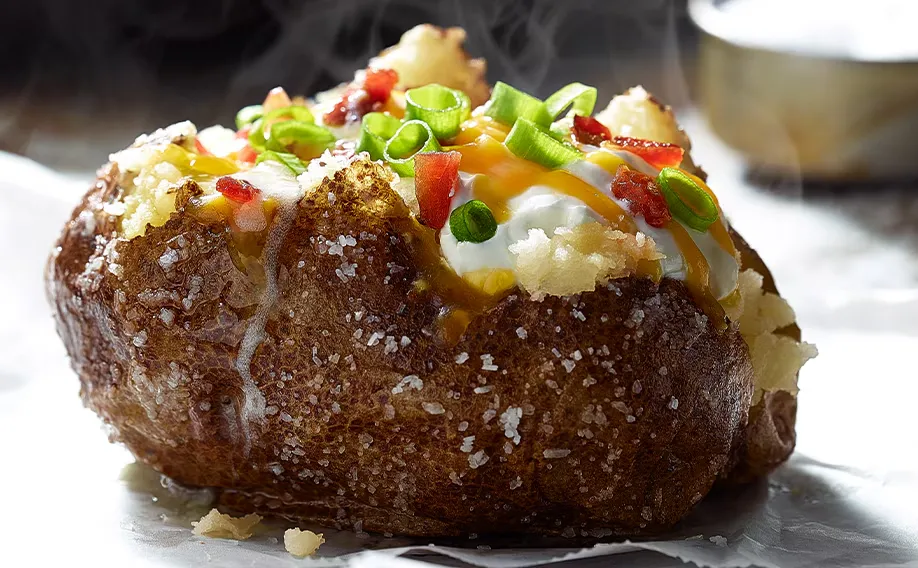
A loaded baked potato is a full meal pretending to be a side dish. You start with a russet the size of your fist, baked until the skin crackles and the inside turns into steam. Then come the toppings butter that melts on contact, sour cream that cools the heat, sharp cheddar, real bacon bits, and a scatter of chives or scallions to make it look fancy. Order one at a steakhouse and you’ll see why it’s been on American menus for over fifty years.
In this guide, you’ll learn what’s actually on a typical loaded baked potato, how it tastes, what it costs in calories, what major U.S. chains charge for it, and what to pair it with. By the end, you’ll know whether the version on the menu is worth the $6 to $10 most American restaurants are pricing it at.
Quick Takeaway: Loaded Baked Potato at a Glance
- What it is: A whole baked russet potato split open and topped with butter, sour cream, cheddar, bacon, and chives.
- How it tastes: Rich, salty, creamy, smoky, with a crispy skin and fluffy interior.
- Average calories: 450–800 per loaded potato, depending on toppings.
- Most common toppings: Butter, sour cream, cheddar, bacon, chives, the classic “everything” combo.
- Best pairing: Ribeye steak, BBQ ribs, grilled chicken, or a Cabernet Sauvignon.
- Average U.S. restaurant price: $5.99–$9.99 per potato.
- Most famous version: Texas Roadhouse and Outback Steakhouse loaded baked potatoes.
What Is a Loaded Baked Potato?
A loaded baked potato is a whole baked potato, usually a large russet split open down the middle and topped with multiple add-ons. The base toppings are butter, sour cream, shredded cheddar, bacon bits, and chopped chives or scallions. Once all five are on, it’s “fully loaded.” Drop any of them, and it’s just a baked potato with stuff on it.
Restaurants bake them three ways. The classic method is to rub the potato with oil and salt, then bake it directly on a rack at 425°F for an hour until the skin crackles. Some kitchens wrap them in foil for steam-baked interiors with softer skins. The cheating method is microwaving partway, then finishing in the oven fast, but the skin never gets that signature crunch. The best steakhouses do the slow oven method.
Loaded baked potatoes have been a steakhouse staple in the U.S. since the 1960s. They started as the pairing for a big cut of meat, something starchy, rich, and slow to eat that gave the table time to dig into the main. Today they show up everywhere from chain steakhouses to BBQ joints to fast food drive-thrus like Wendy’s, where the loaded potato has been a menu fixture since 1983.
Main Ingredients in a Loaded Baked Potato
The base is short. The toppings are where the calories and the personality live.
Core ingredients
- Large russet potato (sometimes Idaho or Yukon Gold)
- Vegetable oil or olive oil for the skin
- Kosher salt for the skin crust
Classic loaded toppings
- Salted butter (a real pat, not a packet)
- Sour cream
- Shredded sharp cheddar cheese
- Crumbled bacon or real bacon bits
- Fresh chopped chives or scallions
Common add-ons and upgrades
- Monterey Jack or pepper jack cheese
- Broccoli florets, steamed
- Chili (turns it into a chili potato)
- Pulled pork or brisket (BBQ-style loaded)
- Ranch dressing
- Garlic butter
- Cracked black pepper
- Jalapeños
- Caramelized onions
- Mushrooms
- Hot sauce or sriracha
A kitchen that takes it seriously will rub the potato skin with oil and salt before baking. That step is what creates the crispy, flaky skin that makes a restaurant baked potato different from one you’d make at home in a hurry. Skip it and you’ve got a soft-skinned potato with a steamy interior which is fine, but not what a loaded baked potato is supposed to be.
Loaded vs. Baked vs. Twice-Baked: What’s the Difference?
Same potato, three different orders. Here’s how they actually compare.
| Type | Texture | Flavor | Calories | Best For |
|---|---|---|---|---|
| Plain Baked Potato | Crispy skin, fluffy interior | Mild, earthy | 200–280 | Light side for a heavy main |
| Loaded Baked Potato | Same base, topped heavy | Rich, salty, creamy | 450–800 | Steakhouse mains, BBQ plates |
| Twice-Baked Potato | Smoother, denser interior | Cheesy, buttery throughout | 400–600 | Holiday menus, upscale spots |
A plain baked potato is a blank canvas. A loaded one is the full painting. A twice-baked is when the kitchen scoops out the inside, mixes it with cheese and butter, and stuffs it back in the skin richer, denser, and not the same dish.
How Restaurants Get the Skin So Crispy
The skin is what separates a restaurant baked potato from a home one. Here’s what actually happens in a steakhouse kitchen:
| Step | What They Do | Why It Matters |
|---|---|---|
| 1. Scrub | Wash and dry completely | Wet skin steams instead of crisps |
| 2. Pierce | Fork holes across the potato | Lets steam escape during baking |
| 3. Oil rub | Hand-rubbed with vegetable oil | Helps the skin brown and crisp |
| 4. Salt coat | Heavy kosher salt crust | Draws out moisture, seasons the skin |
| 5. Bake direct on rack | 425°F for 55–70 minutes | No foil, no pan direct heat on all sides |
| 6. Rest 5 minutes | Sit out of the oven | Lets the inside finish steaming |
Home cooks usually skip steps 3, 4, and 5. That’s why restaurant baked potatoes have that crackly, flavorful skin you actually want to eat, and home ones often have leathery or soft skins that get discarded.
Taste and Flavor Profile
The first thing that hits you is the contrast. A loaded baked potato is hot on the inside and cold on the outside of the toppings, sour cream and cheese don’t fully melt unless the potato is screaming hot, so you get layers of temperature. The fluffy interior soaks up the butter and turns rich. The skin crunches and adds salt. The bacon adds smoke. The chives add a sharp green snap.
The texture is the second thing. Done right, the inside is light and steamy, almost cloud-like. The skin should crack when you press it. Bad versions go two ways: undercooked (dense, gummy interior) or overcooked (dry, sandy texture). When it’s right, every bite has crisp, fluff, melt, and cool all at once.
The topping mix changes the personality
- Classic loaded → salty, smoky, creamy, balanced
- Broccoli and cheese → vegetal, sharp, lighter feel
- Chili-loaded → spicy, meaty, full-meal territory
- BBQ-loaded (pulled pork or brisket) → smoky, tangy, rich
- Sour cream and chive only → cleaner, lighter, lets the potato lead
- Ranch-loaded → tangy, herby, casual
If your loaded baked potato tastes bland, the kitchen used cold sour cream straight from the fridge or skipped salting the skin. Both are common shortcuts.
Nutritional Information
The numbers swing hard based on how loaded “loaded” actually is. A standard restaurant loaded baked potato weighs about 300 to 400 grams with all toppings. Here’s the typical range:
| Nutrient | Plain Baked | Classic Loaded | Fully Loaded (Steakhouse) |
|---|---|---|---|
| Calories | 200–280 | 450–600 | 650–900 |
| Total Fat | 0–1g | 22–30g | 35–50g |
| Saturated Fat | 0g | 12–16g | 18–25g |
| Carbohydrates | 45–55g | 48–60g | 50–65g |
| Sugar | 2–3g | 3–5g | 4–6g |
| Fiber | 4–6g | 4–6g | 4–7g |
| Protein | 5–7g | 14–20g | 22–30g |
| Sodium | 15–30mg | 600–900mg | 900–1400mg |
The potato itself is genuinely nutritious; it’s high in potassium (more than a banana), vitamin C, vitamin B6, fiber, and complex carbohydrates. It’s naturally gluten-free. The skin contains most of the fiber and resistant starch, which is good for gut health. The toppings are where the calorie count climbs fast. Butter alone adds about 100 calories, cheese adds 110, sour cream adds 60, and bacon adds 80.
If you’re watching calories, ask for the toppings on the side. Most kitchens will do it without a fuss. Half the toppings cuts the calorie count nearly in half.
How a Loaded Baked Potato Compares to Other Steakhouse Sides
Trying to pick the right side at a steakhouse or BBQ joint? Here’s how the loaded baked potato stacks up:
| Side Dish | Calories | Protein | Fiber | Verdict |
|---|---|---|---|---|
| Plain Baked Potato | 200–280 | 5–7g | 4–6g | ✅✅ Lightest option |
| Loaded Baked Potato | 450–600 | 14–20g | 4–6g | ✅ High protein, high fiber |
| Loaded Mashed Potatoes | 500–700 | 12g | 3g | ⚠️ Less fiber, more cream |
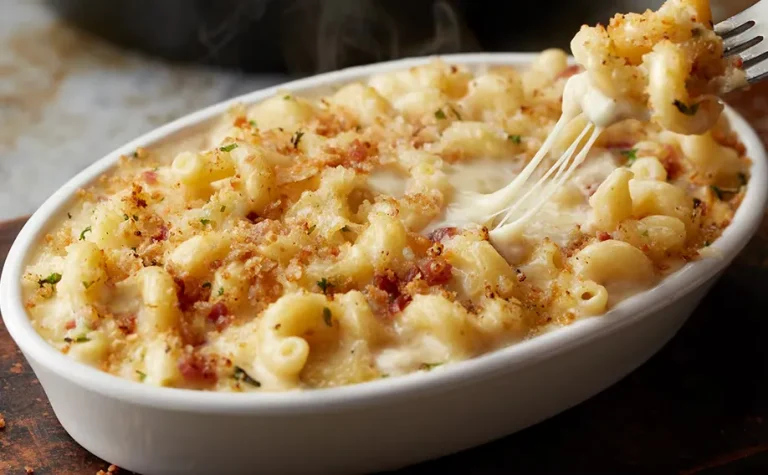
| Mac and Cheese | 450–650 | 14g | 1g | ❌ No fiber, lots of fat |
| Fries (medium) | 380–500 | 5g | 4g | ⚠️ Less protein than loaded |
| Onion Rings | 450–600 | 6g | 3g | ❌ Fried, low protein |
| Steamed Broccoli | 60–100 | 4g | 5g | ✅ Lightest option |
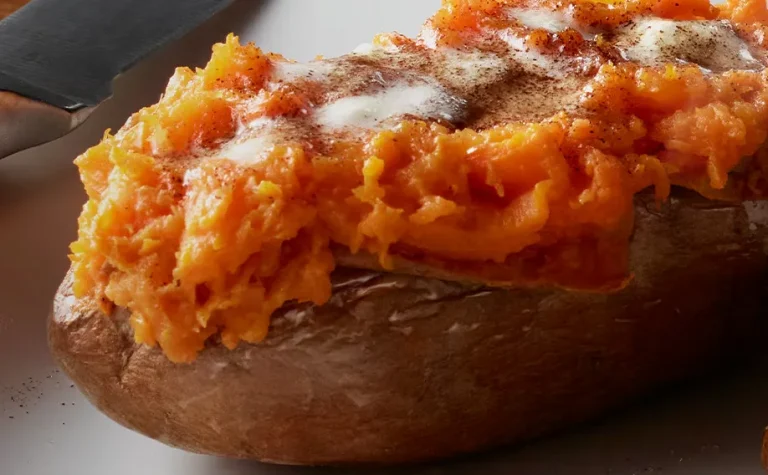
| Sweet Potato (loaded) | 450–600 | 8g | 6g | ✅ Higher fiber |
A loaded baked potato actually beats most steakhouse sides on fiber and protein. The catch is the saturated fat from the cheese, butter, and bacon. Compared to a fried side, though, it usually comes out ahead.
Why People Love Loaded Baked Potatoes
A few real reasons this side has been on American menus for sixty years:
It eats like comfort. Hot, buttery, melted, salty, every flavor in a loaded baked potato is something the human brain is wired to want. It’s hard to be disappointed.
It’s customizable. Don’t like bacon? Skip it. Allergic to dairy? Order it dry with chives. Want to make it a meal? Add chili. Few menu items survive that many edits.
It pairs with everything. Steak, ribs, chicken, fish, BBQ, there’s no main where a loaded baked potato feels out of place.
It feels like a deal. A $7 loaded baked potato at a steakhouse delivers more food and more satisfaction than most $7 appetizers. People notice.
It’s a meal on its own. Wendy’s built a menu around this exact insight. A loaded baked potato with broccoli and cheese is a full lunch under $7 at most chains.
Best Mains and Drink Pairings
A loaded baked potato is usually a side, but the pairing question matters because it’s such a heavy side. The main you pair it with sets the tone.
Best mains to pair it with
- Ribeye, T-bone, or filet mignon
- Prime rib
- BBQ ribs (baby back or St. Louis)
- Brisket and pulled pork plates
- Grilled chicken
- Salmon or grilled fish
- Pork chops
- Meatloaf
Best drinks to order with it
- Beer: A medium-bodied lager or amber ale balances the richness. IPA works for spicier loaded versions.
- Wine: Cabernet Sauvignon is the steakhouse classic, it cuts the fat from the cheese and butter. Malbec works with BBQ-loaded potatoes. Chardonnay if you’ve gone broccoli-and-cheese.
- Cocktails: An Old Fashioned with a ribeye-and-baked-potato combo. A Manhattan or a Negroni for prime rib. Whiskey on the rocks works with anything.
- Non-alcoholic: Iced tea (sweet or unsweet), sparkling water with lemon, or a cola if you’re going casual.
Avoid pairing a fully loaded baked potato with a creamy main like chicken Alfredo or shrimp scampi. Both plates pile cream on cream and the meal ends up feeling like one flat flavor.
Variations and Popular Restaurant Versions
Almost every American chain has a loaded baked potato on the menu. Here’s a look at what’s actually out there:
| Restaurant | Dish Name / Style | Toppings | Avg. Price |
|---|---|---|---|
| Texas Roadhouse | Loaded Baked Potato | Butter, sour cream, cheddar, bacon | $4.99–$5.99 |
| LongHorn Steakhouse | Loaded Baked Potato | Butter, sour cream, cheddar, bacon, chives | $5.99–$6.99 |
| Outback Steakhouse | Loaded Jacket Potato | Butter, sour cream, cheddar, bacon | $5.99–$6.99 |
| Chili’s | Loaded Baked Potato Soup | Soup version with all toppings | $5.99–$7.99 |
| Cracker Barrel | Loaded Baked Potato | Butter, sour cream, cheese, bacon | $4.49–$5.49 |
| Wendy’s | Bacon Cheese Baked Potato | Cheese sauce, bacon, sour cream | $4.99–$5.99 |
| Applebee’s | Loaded Baked Potato | Classic five-topping combo | $5.49–$6.49 |
| Ruby Tuesday | Loaded Baked Potato | Butter, sour cream, cheese, bacon, chives | $4.99–$5.99 |
Prices reflect typical 2026 menu pricing in the U.S. and vary by location.
Beyond the chain versions, here are the styles you’ll see across American menus:
- Classic Loaded Baked Potato is the standard. Butter, sour cream, cheddar, bacon, and chives.
- Broccoli and Cheese Baked Potato. Wendy’s made this version mainstream. Steamed broccoli florets with melted cheese sauce.
- Chili Cheese Baked Potato: beef chili, shredded cheese, sour cream, scallions. Closer to a meal than a side.
- BBQ Loaded Baked Potato topped with pulled pork or brisket, BBQ sauce, cheese, and crispy onions.
- Ranch Loaded Baked Potato, ranch dressing instead of sour cream. Casual and tangy.
- Buffalo Chicken Baked Potato: shredded buffalo chicken, blue cheese, scallions. A buffalo wing in potato form.
- Loaded Sweet Potato, same toppings, swapped base. Sweeter, more fiber, growing in popularity.
- Twice-Baked Loaded: The inside is scooped out, mixed with cheese and butter, and stuffed back in.
- Steakhouse Surf and Turf Loaded, topped with steak bites or shrimp. The premium upgrade at $14+.
How to Tell If Your Loaded Baked Potato Is Done Right
Not all loaded baked potatoes are equal. Here’s a quick checklist for what a properly cooked one should look and feel like:
- Skin texture: Should crack and crunch when you press it. Soft, soggy skin means foil-wrapped or microwaved.
- Interior: Light, fluffy, and steamy. Should “puff” when you fork it open. Dense or gummy means undercooked.
- Temperature: Hot enough to melt butter on contact and slightly soften the cheese.
- Topping distribution: Toppings should be inside the split, not just piled on top. A good kitchen splits it open and fluffs the inside before topping.
- Bacon quality: Real bacon crumbles, not the dried red flakes from a shaker. Big difference in flavor.
- Salt on the skin: You should taste salt when you bite the skin. If not, the kitchen skipped the salt rub.
If your potato fails three or more of these, the kitchen cut corners.
Tips Before Ordering a Loaded Baked Potato
A few things worth knowing before the plate hits the table:
Ask how it’s baked. Real oven-baked potatoes have crispy skins. Foil-wrapped or microwaved ones don’t. If the menu doesn’t say, ask the server.
Order it as a meal. At most chains, a loaded baked potato with a side salad runs $10–$12 and feeds you better than most $14 lunch entrées.
Ask for toppings on the side if you’re watching calories. Halving the cheese and bacon cuts about 200 calories without killing the experience.
Specify “real bacon” if you have a preference. A lot of chains use bacon bits from a shaker. Real bacon crumbles taste much better and most kitchens will switch on request.
Watch the sodium. A fully loaded version can hit 1,400mg of sodium between the cheese, bacon, and butter.
It’s gluten-free at most chains but ask about cross-contamination, especially for the bacon bits, which sometimes contain wheat fillers.
Don’t order it for delivery. The skin softens and the toppings turn cold and greasy by the time it arrives. Eat it at the restaurant or skip it.
Check the size. Some chains serve a one-pound potato. Others serve a half-pound. The calorie counts can double between the two.
Frequently Asked Questions
Is a loaded baked potato a meal or a side?
Both. At a steakhouse, it’s a side that pairs with a steak. At Wendy’s or in a fast-casual setting, it’s marketed as a full meal, and at 600+ calories with 15–20g of protein, it functions as one.
How many calories are in a loaded baked potato?
A classic loaded baked potato at most chain restaurants runs 450–600 calories. A fully loaded steakhouse version can hit 800–900 calories. The potato itself is only 200–280 calories; the rest comes from the toppings.
Are loaded baked potatoes healthy?
The potato itself is genuinely healthy, high in potassium, vitamin C, fiber, and complex carbs. It’s the cheese, butter, sour cream, and bacon that turn it into a calorie-heavy dish. A loaded baked potato isn’t unhealthy, but it’s not light, either.
Is a loaded baked potato keto-friendly?
No. A single potato has 45–55g of carbs, which blows a daily keto carb limit on its own. Even without toppings, it’s not keto-compatible. Stick to a side salad or non-starchy vegetables if you’re tracking carbs.
Are loaded baked potatoes gluten-free?
Usually yes. The potato, butter, sour cream, cheese, bacon, and chives are all naturally gluten-free. Watch out for bacon bits with wheat fillers and shared kitchens with cross-contamination. Ask if you have celiac.
Can I eat the skin of a baked potato?
Yes, and you should. The skin contains most of the potato’s fiber and a big chunk of its nutrients. A properly baked, salt-rubbed skin is also the best part of the dish texturally.
Why are restaurant baked potatoes so much better than the ones I make at home?
Three reasons. Restaurants oil and salt the skin before baking. They bake at high heat (425°F) for an hour or more on a direct rack. And they use larger russet potatoes than most home cooks buy. Skip those steps at home and you get a softer, blander potato.
What’s the difference between a loaded baked potato and a twice-baked potato?
A loaded baked potato is whole, with toppings piled on top. A twice-baked potato has the inside scooped out, mixed with cheese, butter, and sour cream, then stuffed back into the skin and baked again. Twice-baked is denser and richer. Loaded keeps the contrast between fluffy potato and toppings.
Can I make a loaded baked potato a full vegetarian meal?
Absolutely. Skip the bacon, add broccoli, mushrooms, or caramelized onions, and you’ve got a 500-calorie meal with real fiber and protein. A lot of vegetarians at steakhouses end up doing exactly this.
Conclusion
A loaded baked potato is one of those rare side dishes that earns its spot on every American restaurant menu, from drive-thrus to white-tablecloth steakhouses. It’s hot, it’s salty, it’s creamy, it’s crispy, and it eats like comfort food because that’s exactly what it is. When the kitchen takes the time to oil-and-salt the skin and bake it slow, you get a potato that’s worth ordering even without the steak next to it.
If you’re choosing between a loaded baked potato and almost any other side at a steakhouse, the potato is the smarter pick, more protein, more fiber, more flavor for the money. Order it with real bacon, ask for everything inside the split, and eat it before the butter cools. That’s how it’s meant to be eaten.
Related LongHorn Guides
LongHorn Fresh Steamed Asparagus: Calories, Pairings & Guide · LongHorn Great Steak Additions: Toppings, Prices & Guide · LongHorn Mashed Potatoes: Ingredients, Calories & Price